
Custom Customer Relationship Management (CRM) System
Project Overview
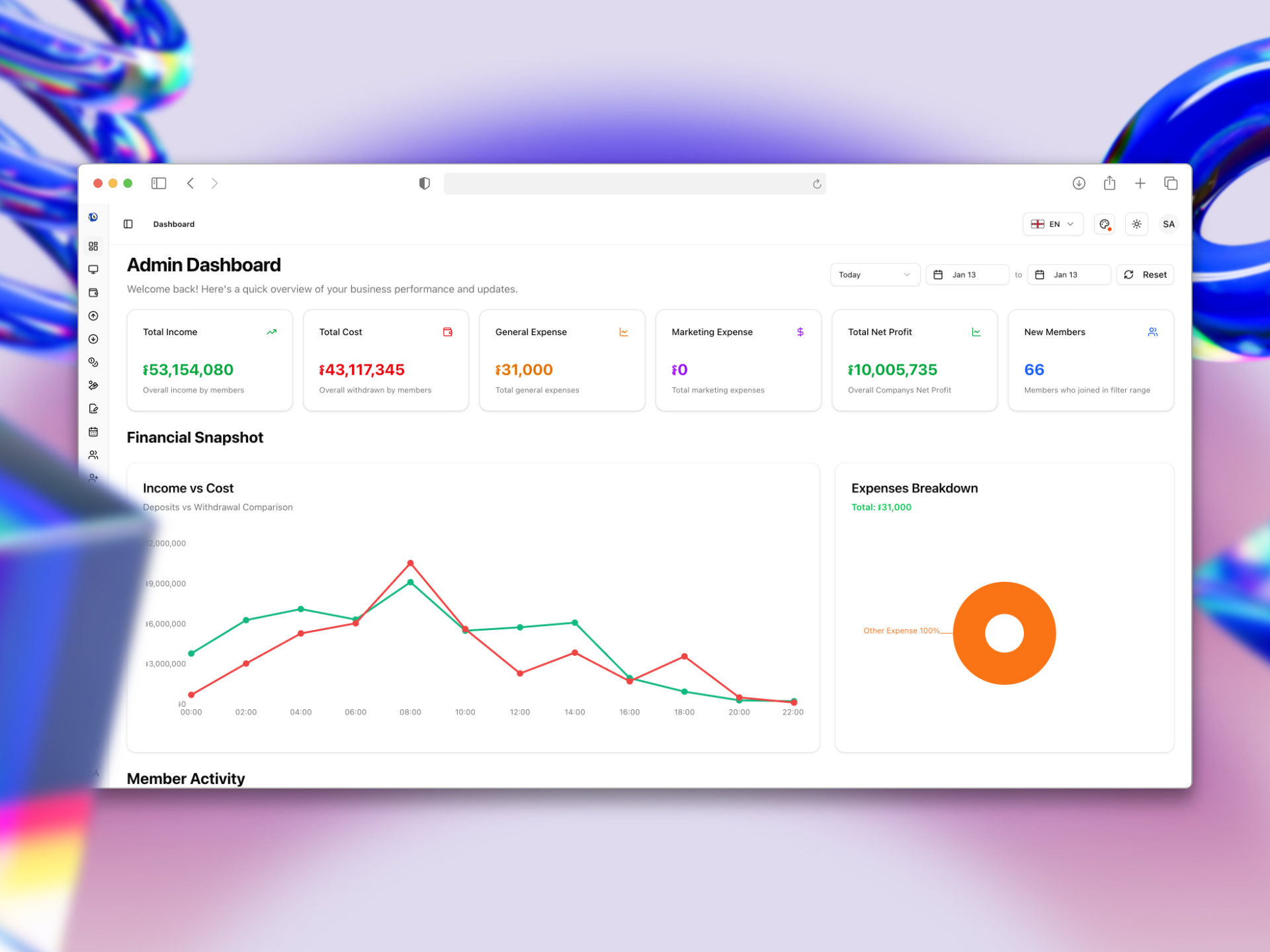
A custom-built CRM system designed to centralize customer data, streamline internal workflows, and replace fragmented Excel spreadsheets and Telegram-based communication. The platform provides a single source of truth for customer relationships, operations, and performance tracking.
The Challenge
The organization managed customers, leads, and support activities through Excel files and Telegram chats. Data was scattered, difficult to access, and lacked role-based control. This resulted in duplicated records, slow response times, limited visibility for management, and no reliable way to track performance or customer engagement.
The Solution
We developed a tailor-made CRM system that unified customer and operational data into one secure platform. The system introduced role-based user management, structured member and customer profiles, lead management pipelines, and an integrated loyalty program. Customer service shift management ensured accountability and continuity across teams. Real-time dashboards, advanced data visualizations, and custom reporting empowered management with actionable insights. The web application was further optimized for mobile use, enabling push notifications and announcements to keep teams informed and responsive.
Key Impact Metrics
KPI highlightsReduced lead response time by 60%
Eliminated 85% of Excel-based customer tracking
Improved customer data accuracy by 75%
Increased customer retention through loyalty program by 40%
Reduced customer service handover issues by 70%
Enabled real-time dashboards for 100% of supervisors and managers
Cut reporting and export time from hours to minutes
Our Agile Process
The CRM was delivered using an agile development approach, starting with process mapping and user journey analysis. Features were released in iterative sprints, allowing stakeholders to validate workflows early and refine requirements continuously. This ensured high adoption and alignment with real business needs.
Final Result
The CRM system replaced manual, fragmented processes with a centralized, scalable platform. Teams gained faster access to customer data, clearer ownership through role-based access, and real-time performance visibility, leading to improved customer engagement and operational efficiency.
Measured and verified business outcome.