
Custom Enterprise Resource Planning (ERP) System
Project Overview
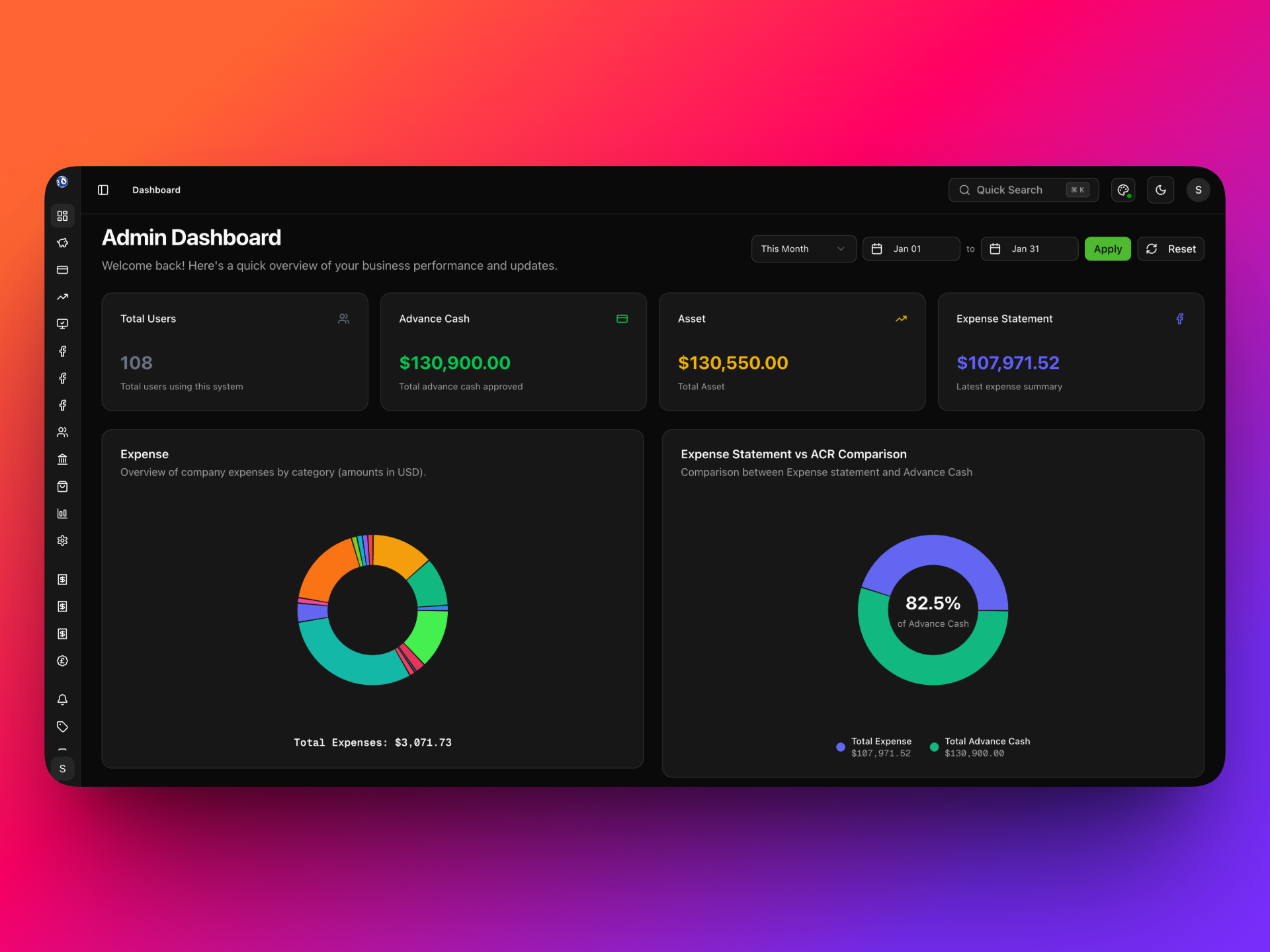
A fully customized ERP system designed to centralize operations, replace fragmented Excel sheets and Telegram-based workflows, and provide real-time visibility across finance, assets, and team activities. The system was built to scale with the organization while maintaining strong access control, automation, and data accuracy.
The Challenge
The organization relied heavily on Excel files and Telegram messages to manage financial requests, expenses, and operational data. Information was scattered across multiple files and chats, making it difficult to track approvals, enforce user roles, maintain data accuracy, or generate meaningful reports. Manual processes caused delays, errors, and limited visibility for management.
The Solution
We designed and developed a custom ERP system tailored to the client’s internal workflows. The platform introduced role-based user management, automated approval workflows for advance cash requests, centralized invoicing and expense tracking, and structured asset management. A real-time data dashboard and custom reporting tools enabled stakeholders to monitor performance, export data in multiple formats, and make informed decisions. The web application was further enhanced into a mobile-friendly experience with push notifications and announcements to keep teams aligned instantly.
Key Impact Metrics
KPI highlightsReduced approval processing time by 65%
Eliminated 90% of manual Excel-based workflows
Improved financial data accuracy by 70%
Enabled real-time dashboards for 100% of management users
Reduced reporting preparation time from days to minutes
Achieved 99.9% system uptime on cloud infrastructure
Increased cross-team operational transparency by 3x
Our Agile Process
The project was delivered using an agile, iterative approach. We began with workflow discovery and stakeholder interviews, followed by rapid prototyping. Features were developed in sprints, with regular feedback sessions to ensure the system aligned with real operational needs. This approach allowed us to adapt quickly, prioritize high-impact features, and deliver value early.
Final Result
The new ERP system replaced manual and fragmented processes with a centralized, secure, and scalable platform. Approval times were significantly reduced, data accuracy improved, and management gained real-time visibility into financial and operational performance.
Measured and verified business outcome.